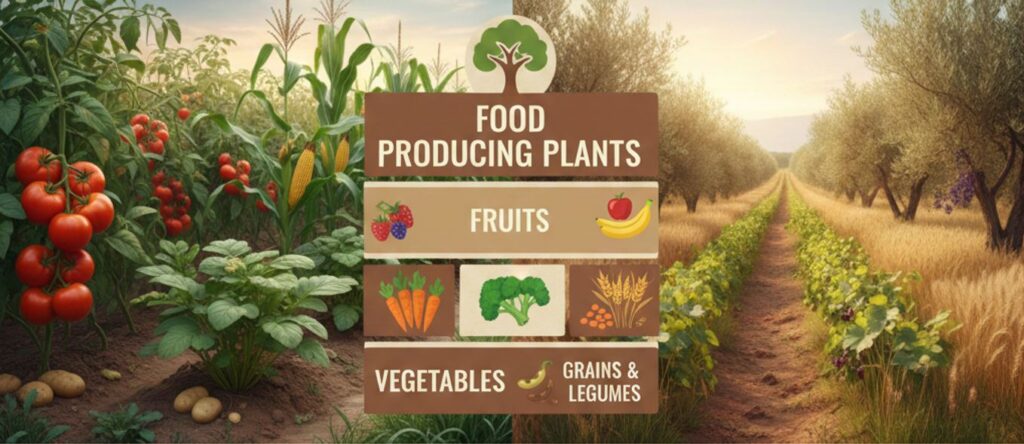
Food-producing plants are the foundation of agriculture and human nutrition. They can be categorized based on what they produce, how they grow, and where they are cultivated. Below is a complete breakdown covering plants, trees, and farming systems.
🌳 1. Food-Producing Trees
Trees that bear edible fruits, nuts, or other food products.
🍎 Fruit Trees
- Apple
- Apricot
- Peach
- Plum
- Pomegranate
- Citrus (Orange, Lemon, Mandarin)
- Fig
- Mulberry
Used in: Orchards, farms, home gardens
🌰 Nut Trees
- Almond
- Walnut
- Pistachio
- Hazelnut
Used in: Dry fruit farms, commercial orchards
🌴 Plantation Food Trees
- Date Palm
- Coconut
- Olive
Used in: Large-scale farms and plantations
🌱 2. Food-Producing Plants (Non-Tree)
🥕 Vegetable Plants
Plants grown for edible leaves, roots, fruits, or stems:
- Tomato, chili, cucumber
- Potato, carrot, radish
- Spinach, lettuce, cabbage
- Okra, brinjal
Grown in: Farms, kitchen gardens, greenhouses
🌿 Herbs & Leafy Greens
- Mint, coriander, parsley
- Basil, thyme
- Fenugreek, spinach
Used for: Cooking, seasoning, garnishing
🌾 3. Cereal & Grain Crops
Staple food plants grown on large farms:
- Wheat
- Rice
- Maize (corn)
- Barley
- Oats
Used for: Flour, rice, animal feed
🫘 4. Pulses & Legumes
High-protein food crops:
- Lentils (daal)
- Chickpeas
- Beans
- Peas
Benefits: Improve soil fertility (nitrogen fixing)
🌶️ 5. Spices & Flavor Crops
- Chili
- Garlic
- Onion
- Ginger
- Turmeric
- Black pepper
Used for: Flavor, preservation, medicine
🍓 6. Fruit Plants & Vines
Non-tree fruit producers:
- Grapes
- Strawberries
- Melons
- Watermelon
Grown in: Fields, trellises, greenhouses
🌾 7. Root & Tuber Crops
- Potato
- Sweet potato
- Ginger
- Turmeric
Important for: Carbohydrates & storage foods
🌱 8. Medicinal & Functional Food Plants
Plants used for both food and health:
- Aloe vera
- Stevia
- Moringa
- Lemongrass
🧑🌾 9. Types of Food-Producing Farms
🚜 Crop Farms
- Grain farms
- Vegetable farms
- Pulse farms
🍎 Orchard Farms
- Fruit orchards
- Nut orchards
🌿 Herb & Organic Farms
- Culinary herbs
- Medicinal plants
- Organic vegetable farms
🌱 Greenhouse & Nursery Farms
- Seedling production
- Controlled climate food growing
🌊 Aquaponics & Hydroponics Farms
- Soil-less farming
- High-yield vegetable production
🏡 10. Home & Urban Food Production
- Kitchen gardens
- Rooftop gardens
- Container farming
📌 Why Categorizing Food Plants Matters
- Helps in better farm planning
- Improves agricultural research
- Useful for directories & SEO
- Makes food systems easier to understand
🥗 Conclusion
Food-producing plants include a wide range of trees, crops, herbs, and farming systems. Proper classification helps farmers, consumers, researchers, and food businesses make informed decisions and supports sustainable food production.
For further reading click on the links below
Sabnum flower nursey and food plants, ahead chaman housig

Leave a Reply